

Rhaina Cohen
Rhaina Cohen is a producer and editor for Embedded, NPR's home for documentary storytelling. She's developed, produced, and edited acclaimed narrative podcast series on a wide range of issues, from abortion access to the aftermath of gun violence.
She was previously a producer and editor for the seasonal narrative shows Invisibilia, Rough Translation, and Louder Than A Riot. For years, she covered the social sciences as a producer for Hidden Brain. Cohen joined NPR as an intern for Planet Money.
She's also the author of the national bestseller, The Other Significant Others: Reimagining Life with Friendship at the Center. In 2024, Cohen gave a TED talk about the overlooked potential of friendship. She's written about the topic for The Atlantic, The New York Times, The Washington Post, and TIME.
Cohen's work has been honored by numerous awards, including a National Headliner Award and an Edward R. Murrow Award, and she's received grants from the National Endowment for the Humanities Public Scholars Program and The Greater Good Science Center. Cohen was a Marshall Scholar at the University of Oxford, where she earned a master's in comparative social policy. She holds a bachelor's degree in American Studies from Northwestern University.
-
 Buying a home is a conventional milestone for couples. But as home prices skyrocket, many Americans are buying homes with someone who isn't their romantic partner.
 -
In the latest story in the NPR's series The Science of Siblings, we hear about a practice that dates back to ancient times that allows people to turn a friend into a sibling.
-
 The demand for "proper" English can be used to shut people out of spaces and opportunities. The folks at NPR's "Rough Translation" podcast have a story to tell.
 -
 After the shooting at the Capital Gazette newspaper, the surviving staff resolve to rebuild their paper.
 -
 This week on Hidden Brain, research about prejudices so deeply buried, we often doubt their existence. We'll begin with police shootings of unarmed Black men. We also look at how biases affect judges.
 -
 On this week's radio show, we trace the history of fake news. Plus, in a time when accurate information is so important, we ask who ultimately bears the cost when no one wants to pay for local news.
 -
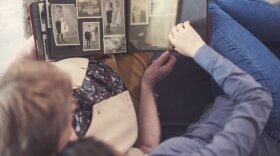 Why are we so often pulled into memories of the past? This week, we bring you a 2018 episode about our ruminations on what we could have done differently, and what we wish we could do again.
 -
 When disaster strikes, we want to know, who screwed up? This week we explore the psychology of warnings: Why some warnings get heard, and why some of us are better at seeing what lies ahead.
 -
 We live in a world of stories. They're in movies, books, and plays. They're even in the things that we buy.
 -
 There's an event we were all invited to the day we were born. Attendance is mandatory. But we'd rather not think about it. On this week's radio show, the lengths we go to to avoid thoughts of death.


