

Hundreds of Camp Lejeune veterans and grieving family members gathered in downtown Jacksonville Wednesday, demanding an end to the federal backlog delaying claims related to toxic water exposure.
The demonstration at the Freedom Fountain centered on a push to pass the Ensuring Justice for Camp Lejeune Victims Act, legislation supporters say would streamline the process for people whose claims remain unresolved.
Military banners and protest signs surrounded the plaza around Jacksonville’s iconic Freedom Fountain. Flanked by medallions honoring the five branches of the armed services, the monument was built to honor troops who passed through Onslow County.
On Wednesday, it became a gathering place for veterans and families who say the government failed to adequately warn them about contamination at Camp Lejeune—and has been too slow to compensate those who became sick.
The crowd stood shoulder to shoulder as the fountain’s 50 water jets roared nearby, one representing each state.

Related content: Ross votes no on defense spending bill, cites SAVE Act and removal of amendment for Camp Lejeune victims
A decades-old contamination
The fight traces back to contamination in Camp Lejeune’s drinking water.
From 1953 to 1987, drinking water at Camp Lejeune was contaminated with industrial solvents, including benzene and trichloroethylene, at levels that federal agencies have determined posed serious health risks.
For decades, military personnel and their families used the contaminated water for drinking, cooking and bathing.
Documents later showed that military officials had warnings about the contamination in the early 1980s, but some contaminated wells remained in use for years.
Veterans and their families say the government failed to adequately warn them about the danger and that the contamination is connected to the medical problems many families have experienced.
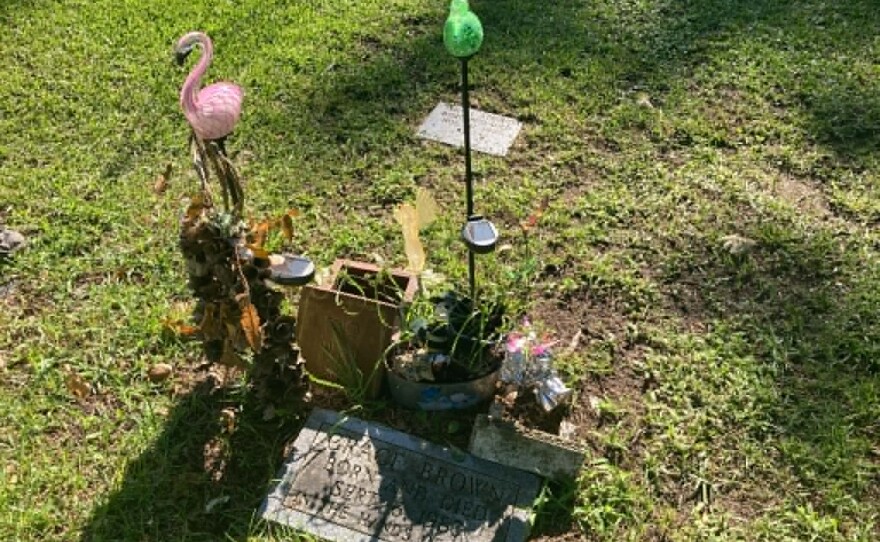
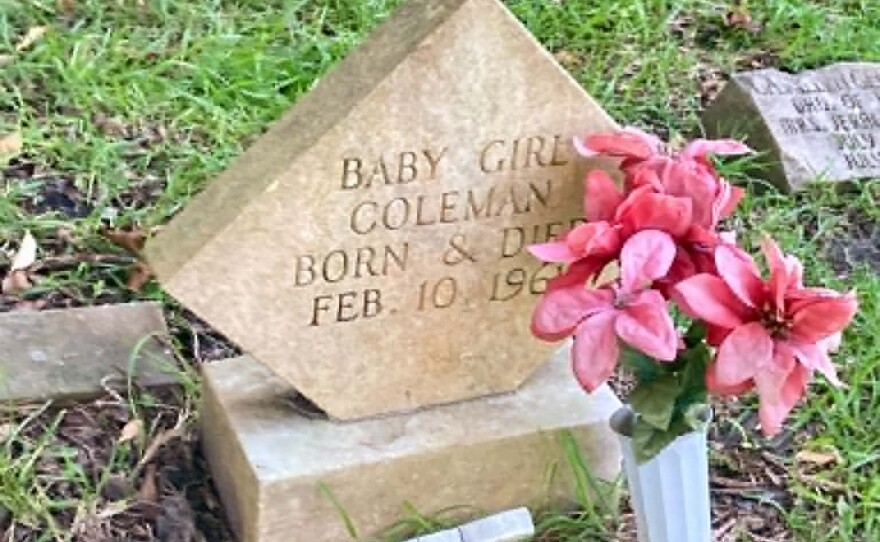
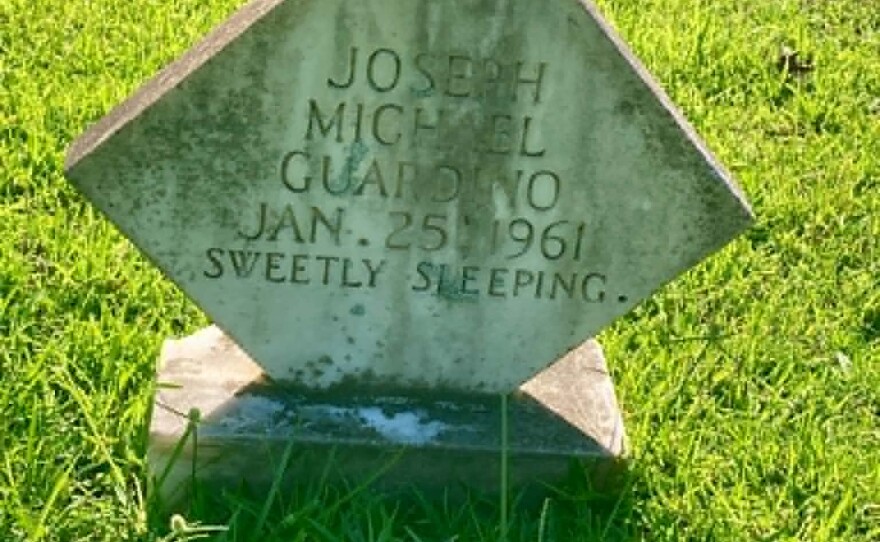
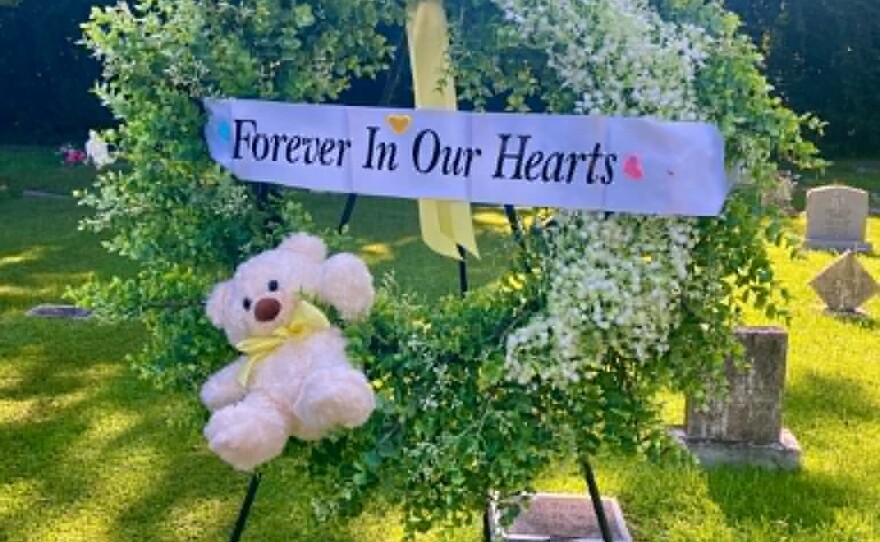
From the Freedom Fountain, demonstrators marched toward the quiet oak trees of “Baby Heaven,” a small infant cemetery section at nearby Lejeune Memorial Gardens.
For decades, Marine families struggled to understand why pregnancies were ending in stillbirths or why some newborns died shortly after delivery.
Local clergy and community organizations donated the plot so families could give their babies a proper burial.
Today, the rows of small headstones are a reminder of the families who say they were left without answers.

Related content: Advocates react after federal court pressures both sides to settle Camp Lejeune water contamination lawsuit
‘It would be 2424’
Among those leading the current fight are Marine veteran Brian Amburgey and his wife, April.
Amburgey was exposed to the Camp Lejeune water as a young combat engineer. He now battles severe, chronic illnesses that he attributes to that exposure.
He has spent years organizing rallies and lobbying Congress over the claims backlog.
Amburgey says the number of unresolved cases and the pace at which claims are being handled have left veterans facing an extraordinarily long wait.
“It's been over four years since the Justice Act was passed August 10th of 2022. So, of the 407,000 claims, less than one half a percent has been set. At the rate it's going, it's going to take another 396 years. It would be 2424.”
His wife, April, lost a child in 2001. The story of Baby Heaven brought those memories back.
“I don't know what caused me to lose my child. These people do. They know that it was the water at Camp Lejeune and that is just...I can't even find the words to say how that makes me feel and I couldn't imagine how they feel. My heart just goes out to them.”
But April says grief isn't the only emotion driving her.
“I'm angry. I'm angry for our veterans. I'm angry for our family members. I'm angry that Congress and Senate is out for their own political gain that they cannot pass this bill. Why?”

Related content: Advocates are not calling recent rulings in Camp Lejeune water contamination case a win
Veterans describe years of illness
That frustration was shared by other veterans and families attending the rally.
Don Gray of New Bern served in the Marine Corps from 1977 to 1980, including three years at Camp Lejeune.
On September 11, 2017, Gray says a doctor told him he had cancer.
“On 9-11, you've got cancer. I was, 'Okay, how are we taking care of it?'”
Gray was diagnosed with small cell carcinoma and later with head and neck cancer at the base of his tongue. Earlier this year, doctors at CarolinaEast told him he had a third, different form of cancer.
“My adrenal gland, which sits right on top of my kidney. There are 501 cases a year of that. I keep hitting rare ones. And it's non-curable, stage 4.”
Cary Allgood grew up on Camp Lejeune and graduated from Lejeune High School in 1973. He says he did not learn about the contamination until classmates began talking about it on social media in 2010.
“I did not attend the Lejeune High School Class Reunion 2010. However, I heard talking from some of my classmates through social media about what was happening with the Lejeune water. Seeing how I had no family history of kidney cancer, I started doing research. And it was in July of that year that I decided to go to one of the seminars that was being hosted by Jerry Ensminger and Mike Portain, I met with them in Norfolk, Virginia, in July of 2010.”
Allgood had already been diagnosed with kidney cancer. He says he was later diagnosed with myelodysplastic syndrome, a blood disorder that can develop into leukemia.
“Since that time, I have been diagnosed with MDS, which is myeloma dysplastic syndrome, which is a blood cancer, and there is no cure. So, right now I have a very low risk case, but it can develop into a leukemia, which is, again, there's no cure for it. So, I'm on borrowed time.”
Maryann Gogan of Richlands also has a family history she connects to Camp Lejeune.
Her father was stationed at Camp Lejeune in the 1980s. He later died of esophageal cancer, and her mother died of non-Hodgkin’s lymphoma.
Gogan says she and her siblings also experienced health problems they associate with the contamination.
She says her sister Sherry died of cancer in her early 40s.
“My oldest sister Sherry died of ovarian, uterine, and metastasized to her breast cancer. She was only in her early 40s. That was in 2004. All of us girls, me, my sister Pam and Sherry are infertile.”
Despite the illnesses in her family, Gogan says she remains proud of her connection to the Marine Corps.
“I'm a proud USMC daughter. My husband's retired, military also, and I'm just, I'm proud of my Marine Corps.”
But she says that pride does not extend to her confidence in the federal government’s handling of the claims.

Related content: Advocates, victims rally at Capitol Hill, urging lawmakers to support Ensuring Justice for Camp Lejeune Victims Act
Lawmakers push for changes
The crowd’s frustration was a major focus for Congressman Dr. Greg Murphy, who spoke at Wednesday’s rally.
Murphy is one of the lawmakers who introduced the Ensuring Justice for Camp Lejeune Victims Act.
Supporters say the bill would make changes to the claims process, including provisions dealing with jury trials, attorney fees and jurisdiction.
Murphy said the goal is to get the cases moving.
“That helps streamline this process, making sure that people have a jury by their peers, making sure that we limit attorney's fees, making sure that the area of jurisdiction is just in North Carolina, South Carolina, and really able to try to move things forward. And this is where we're stuck right now.”
Murphy also pointed to disruptions in Washington earlier this year as one factor contributing to the delay, while acknowledging that lawmakers still need to move the legislation forward.
“We got locked out of DC from a lockout for 76 days, some crazy amount. And it's put the legislative schedule way, way, way behind. And it's hurt a lot of things. That said, that doesn't mean that I have not been, and as well as my colleagues, advocating with the speaker, with the Democratic leader, with other individuals to get this bill moving. I have some hardcore idiots, I would call them, hard people that have been up against this stuff, but it's gonna happen.”

Read more: Camp Lejeune Justice Act Series
Organizers plan Washington demonstrations
Organizers say Wednesday’s rally was only the beginning.
They are planning another demonstration on the lawn of the U.S. Capitol September 14 and 15, hoping to pressure lawmakers to act before the legislative calendar runs out.
Amburgey says the goal is to look House and Senate lawmakers directly in the eye and push them to vote on the Ensuring Justice Act.
At the end of Wednesday’s rally, he offered a prayer for the veterans and families involved in the fight.
“May we never become a nation that forgets who defended our freedom. May we never allow bureaucracy to be justice. May we never stop fighting for the veterans who fought for us. God bless our veterans and families. God bless the United States of America.”
For veterans and families who have waited years for their cases to be resolved, the September demonstrations could be another critical moment in the fight for compensation.

