

This is the latest installment in our Main Street NC series from the WUNC Politics Podcast. We're visiting communities across the state to hear from local leaders about the issues and challenges they’re facing, from beach erosion to healthcare access.
Sampson County has been known more as a place to stop on the way to the beach, rather than a destination itself. Its rivers and waterways got attention during flooding and hurricanes, but hadn’t been used much for outdoor recreation.
That changed when the 3,000-member Coharie Indian Tribe launched an effort to clean out debris from the Great Coharie River near their headquarters north of Clinton. That led to a unique recreation and tourism initiative where members of the Coharie Tribe lead visitors on guided kayaking trips down the river.
River coordinator Kullen Bell says they’ve taken hundreds of people on kayaking tours.
"You get out on the Great Coharie River with Coharie tribal members who have a deep understanding of the waterways and have a deep connection and understand the native species versus invasive species, the tree species, what type of birds you're going to see," Bell said. "That neat part of the environmental education component tied in with indigenous wisdom is just an overall really neat package that we're able to offer."
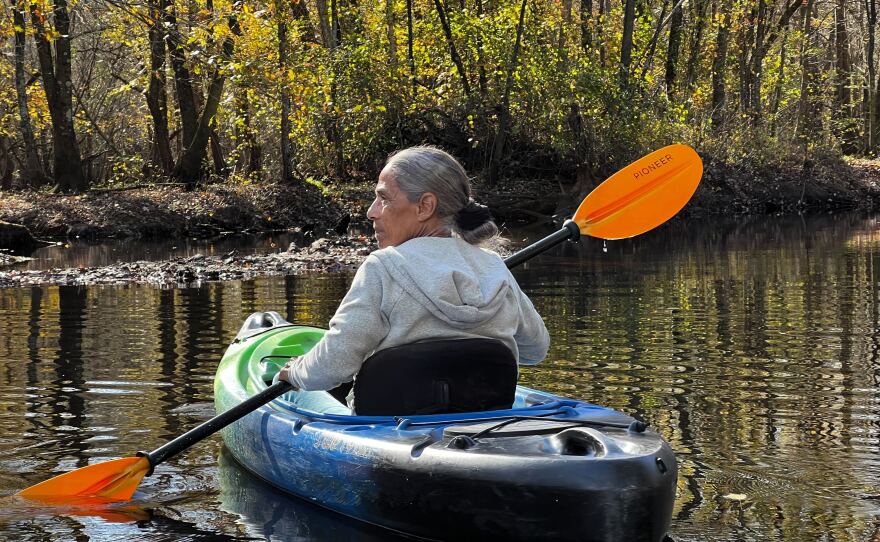
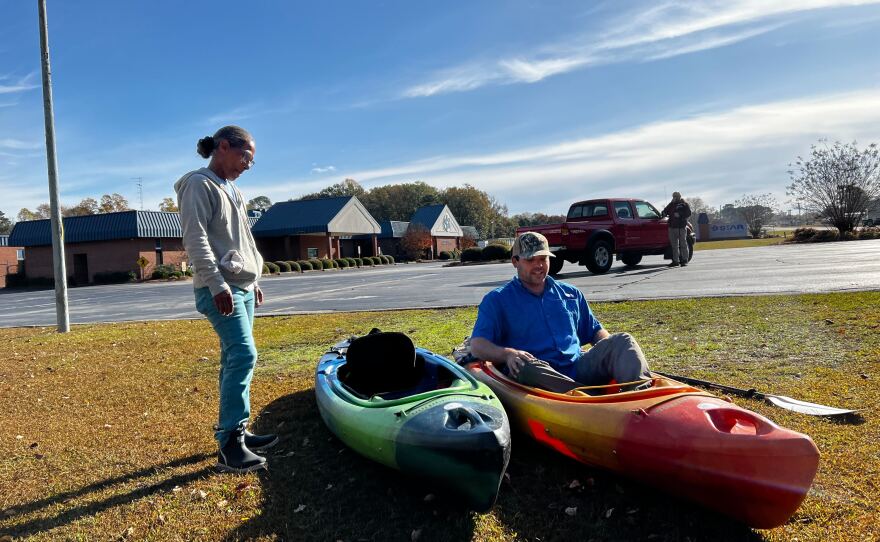
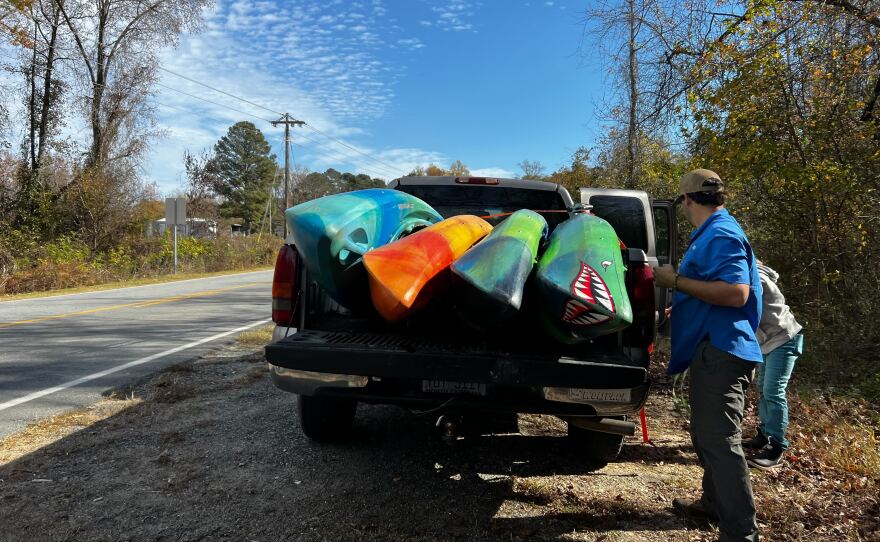
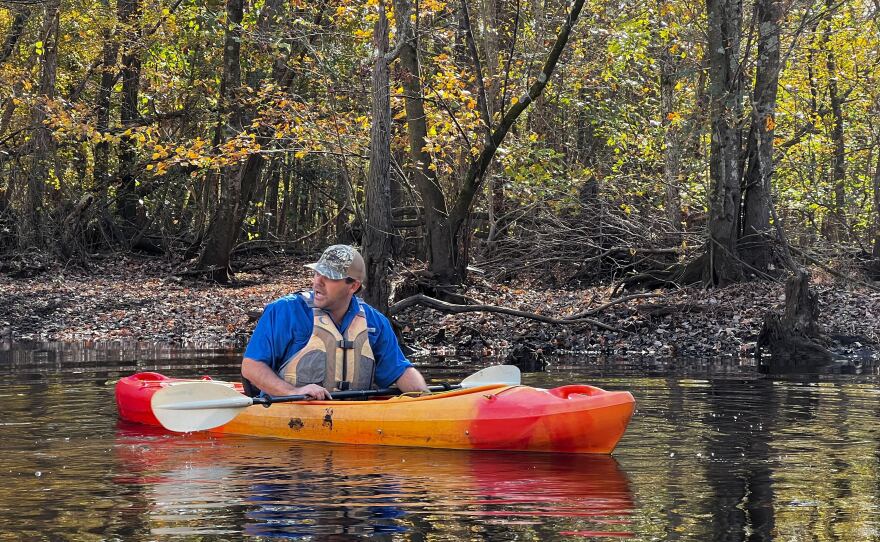
I recently spent several hours paddling the river with Bell and fellow guide Carol Brewington. Signs of human civilization disappear shortly after leaving the kayak launch along U.S. 421, and the guides pointed out beaver lodges and dams and taught us about the unique plants and trees that line the river.
They also explained how the river is maintained in partnership with the N.C. Department of Environmental Quality. Trees and other plant debris are removed and tied to trees on the banks according to state regulations, which keeps the river flowing to limit flooding during storms and makes the river accessible for recreation.

After the river trip, visitors get a taste of Coharie culture and history at the Tribal Center. During our visit, a three-year-old girl was practicing a song for an upcoming pageant competition.
There’s also a display with a 600-year-old dugout canoe found in a nearby river. State archaeologists determined that the canoe likely belonged to Coharie ancestors, which allows them to keep it here.
The river tourism program is also boosting businesses in downtown Clinton, about eight miles south of the Coharie headquarters.
R&R Brewing opened its taproom and restaurant a few months ago in a historic building that once housed a car dealership.
Owner Ryan Roberts says he picked Clinton for his second location, opting for the town of 8,000 people instead of a larger city. The brewery’s original location is in Mount Olive, about 30 minutes away.
"We wanted to maintain our personality and kind of this 'rest and relaxation' vibe, and that's more difficult to do in busier cities, more metropolitan areas," Roberts said. "It's more competition. It's more go, go, go, go. We wanted to focus on smaller communities — and smaller meaning, like sub-20,000 population."


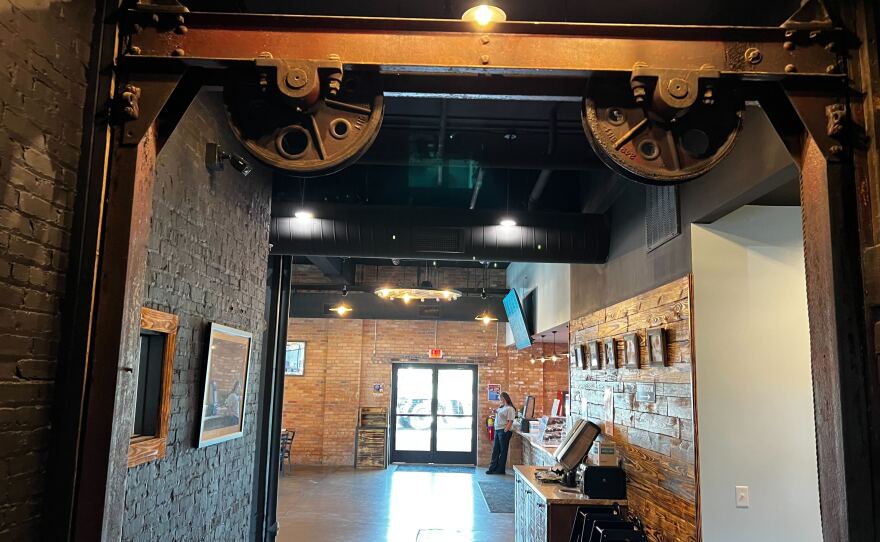


R&R Brewing’s large space has become popular for hosting events, and it’s the sort of bustling brewpub you’d typically see in a larger city or suburb. Clinton’s once sleepy downtown also has a coffee shop and art gallery down the street from the brewery.
Sampson County’s tourism agency hopes that can draw day-trippers from the Triangle, Fayetteville and further afield.
Back at the Coharie Tribal Center, I spoke with tribal administrator Greg Jacobs and Coharie River director Philip Bell to learn more about the river program and what it’s brought to the Coharie people.
NOTE: This transcript has been edited for brevity and clarity.
Tell me a bit about the history of the Coharie Tribe and your roots here in the Sampson County area.
Jacobs: "We were down in the eastern part of the state, at the present city of New Bern, and the tribe was known at that time as the Neusiok Tribe. (Later), we show up in Sampson County, and we land here on the Great Coharie River. The reason for moving from the east coast further west into North Carolina was finding a place that we were safe to raise our family.
"In those initial years in the early 1700s, we were running for our life. We were running from European diseases that we had no immune system to help with. We were running from European conflict and also intertribal conflict. When we came to the Coharie River, it was a beautiful place. It was a safe place. We stopped running and we've never left."
What do you see as the significance of the Great Coharie River to the tribe?
Bell: "This is our home. When we fled the settlers moving in, when we settled on the Coharie River, it was somewhere where we could be at peace, and that peace came and stayed until the mid-to-late ‘60s. Up until the ‘60s, this parcel of land across the river from us was open to everyone.
"People from all walks of life could go there. We couldn't go to town to have a celebration or a banquet or anything. We could always go to the river to the sandy banks and have parties. That changed when this parcel, 4,800 acres, was taken over by the state through a wetlands mitigation process. (After regaining access), something happened there, and since then, the river has just been medicine for our people and medicine for anyone that goes down there."
How did the tourism and recreation piece of this project come together?
Bell: "When we first started cleaning it, we were just concerned about our people. We wanted our young folks to have something that they could enjoy."
Jacobs: "We rediscovered the beauty of that river and how it made us feel. We realized that we had a beautiful, entertaining piece right here in the backyard, so rather than traveling to Disney World or Carowinds or whatever, we had something to showcase."

Do you see this as something that could be a model for other American Indian tribes or other rural communities that might have some water resources that are similar?
Jacobs: "What the Coharies have started here has had a ripple effect across the state, down into Lumbee country and the other tribal groups. They've seen this as a model, and they've grasped their responsibility to Mother Nature to clean up their rivers, to start tourism services. We hope we've influenced them for the better."
Outside of the river program, are there other events and initiatives that the Coharie are currently working on?
Jacobs: "We have a tremendous housing project that we've that we put in place for economically disadvantaged families. We rehabilitate probably about 16 houses a year. We provide down payment assistance to five or six families that cannot afford a home a year.
"One of the new initiatives that I'm really excited about is called a Lighthouse Initiative. We're looking at hopefully powering this entire campus with solar energy. Hopefully the sun will produce enough energy that we can store that and sell it to the utility companies. We're hoping that in times of crisis that we'll be able to provide emergency shelters."
Listen to the full conversation on the WUNC Politics Podcast. And listeners in Clinton and Sampson County can check out WUNC News on the radio at 91.9 FM.
Three things to do in Sampson County
Barn Quilt Trail: The county boasts more than 220 barn quilt designs painted on barns, home and other buildings throughout the area. It’s developed a driving tour and claims to be the “Barn Quilt Capital of North Carolina.”
Hubb’s Farm: Open during spring, summer and fall months, the farm welcomes visitors for a 15-acre corn maze, wagon rides, slides, a jumping pillow and other farm activities.
Ho Yang Fine Art: Artist Grace Ho runs an art gallery and studio in downtown Clinton, part of a close-knit community of visual art in Sampson County that also includes the ArtWorks of Sampson gallery down the street.
