Public Radio East serves Eastern North Carolina by providing news, fine arts, and informational programming that challenges, stimulates, educates, and entertains an intellectually curious audience.

© 2026 Public Radio East

Public Radio East
800 College Court
New Bern, NC 28562

EIN 56-1802728
Public Radio For Eastern North Carolina 89.3 WTEB New Bern 88.5 WZNB New Bern 91.5 WBJD Atlantic Beach 90.3 WKNS Kinston 89.9 W210CF Greenville
Play Live Radio
Next Up:
0:00
0:00
0:00 0:00
Available On Air Stations

U.S. military quietly redraws command map in the Western Hemisphere

A MARTÍNEZ, HOST:

The U.S. military is reorganizing its forces in the Western Hemisphere. They've ended Operation Southern Spear, which was responsible for strikes on alleged drug boats, and folded it into a new joint task force. Here's NPR's Eyder Peralta.

EYDER PERALTA, BYLINE: The latest move came this week when U.S. Southern Command announced the Joint Task Force Western Hemisphere. A video introducing the news showed troops rappelling from helicopters and patrolling a jungle. SOUTHCOM Commander General Francis L. Donovan says the task force will put, quote, "total systemic friction" on drug networks.

(SOUNDBITE OF ARCHIVED RECORDING)

FRANCIS L DONOVAN: We will apply total systemic friction, put pressure on the networks.

PERALTA: In practice, this means a unified command for many of the military's different divisions and easier coordination with partner militaries. Last year in December, the U.S. Army did something similar, collapsing several headquarters into the Western Hemisphere Command, led by a four-star general. Explaining the shift, Major Joshua Dulaney said it was in response to an environment that has reached a, quote, "complexity and urgency not seen since the Cold War." You have China building strategic infrastructure from Peru to Argentina, he said, and you have Russian presence in Nicaragua and Cuba.

Of course, these moves also come as the United States has stepped up military action in the region. Strikes against alleged drug boats have left more than 200 people dead since they started in September, and in January, U.S. forces swooped into Venezuela to depose President Nicolás Maduro. Both actions raised questions about their legality. Mark Cancian, a retired Marine colonel who now works at the Center for Strategic and International Studies, says these moves show the military is aligning with the Trump administration, which has said that the Americas are a priority. But he says...

MARK CANCIAN: I was alive during the Cuban Missile Crisis, and this is nothing like the Cuban Missile Crisis. So, you know, we're not even close to that level of threat.

PERALTA: At the time, the Soviets had placed nuclear missiles in Cuba, which itself had built a formidable military. Today, argues Cancian, the U.S. is in full control of the Americas.

CANCIAN: There is no military competitor in the hemisphere.

PERALTA: He sees all of these moves as organizational, not as a presage toward some urgent military action in Cuba or Nicaragua or any other country in the Americas.

Eyder Peralta, NPR News, Mexico City.

(SOUNDBITE OF BARK PSYCHOSIS' "THE LOOM") Transcript provided by NPR, Copyright NPR.

NPR transcripts are created on a rush deadline by an NPR contractor. This text may not be in its final form and may be updated or revised in the future. Accuracy and availability may vary. The authoritative record of NPR’s programming is the audio record.

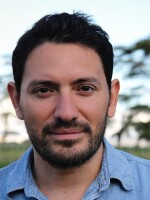
Eyder Peralta is an international correspondent for NPR. He was named NPR's Mexico City correspondent in 2022.