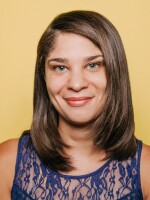
Samantha Power has been many things: an activist, a war correspondent, an author and a policymaker.
She served on President Obama's National Security Council, and later, she was his ambassador to the United Nations.
In her new memoir, The Education of an Idealist, she describes how she went from working outside the system – as a fierce and idealistic defender of human rights — to moving inside, as a diplomat who must, above all else, be ... diplomatic.
Interview Highlights
On her sense of danger and risk
I don't think I have a great appetite for risk. Especially as I've gotten older and with a family, I have even less of an appetite for risk. But I try to look at a situation and ask myself: By going, will I be more credible when I come back? Does it give me a kind of comparative advantage that I wouldn't have if I was just reading cables and news accounts of what's happening? And will I actually learn something that gives me an idea about how we can bridge differences in a negotiation?
On how it seems like America's approach to worldwide crises has changed
I think the fatigue with the use of military force and the perception that it rarely addresses the root causes of the crises that bring us there in the first place and that fatigue is entirely legitimate and maybe it's a healthy corrective to the kind of adventurism or maybe an overconfidence that existed for a long time. But if you then talk to people and say "How are we going to prevent Iran from acquiring a nuclear weapon?" It requires diplomacy and engagement and foreign policy. Just yelling at them and telling them to be different is not a substitute for the kind of years-long investment in building a coalition to isolate Iran and then to effectively take the nuclear weapons program away. That's a much more constructive path, precisely because Americans don't want war in the Middle East again and nor should they.
Victoria Whitley-Berry and Reena Advani produced and edited this interview for broadcast. Heidi Glenn adapted it for the Web.
Copyright 2023 NPR. To see more, visit https://www.npr.org.