
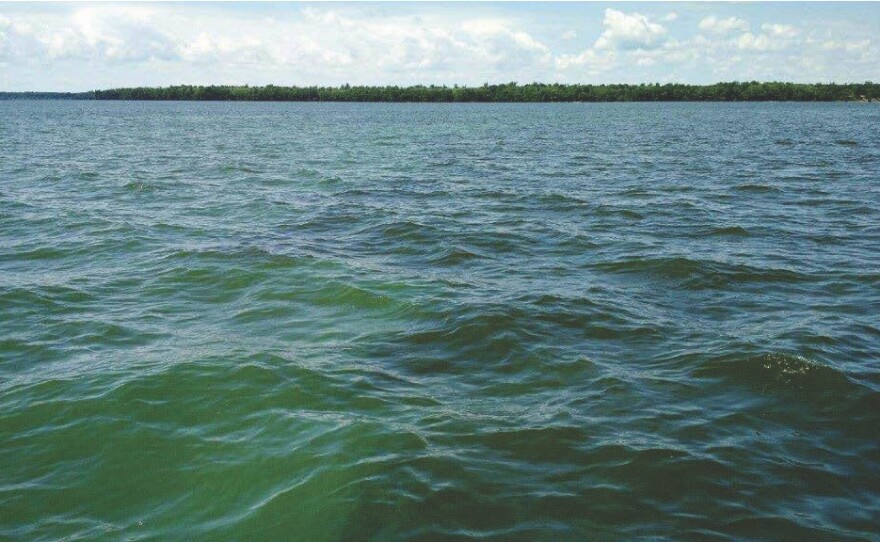
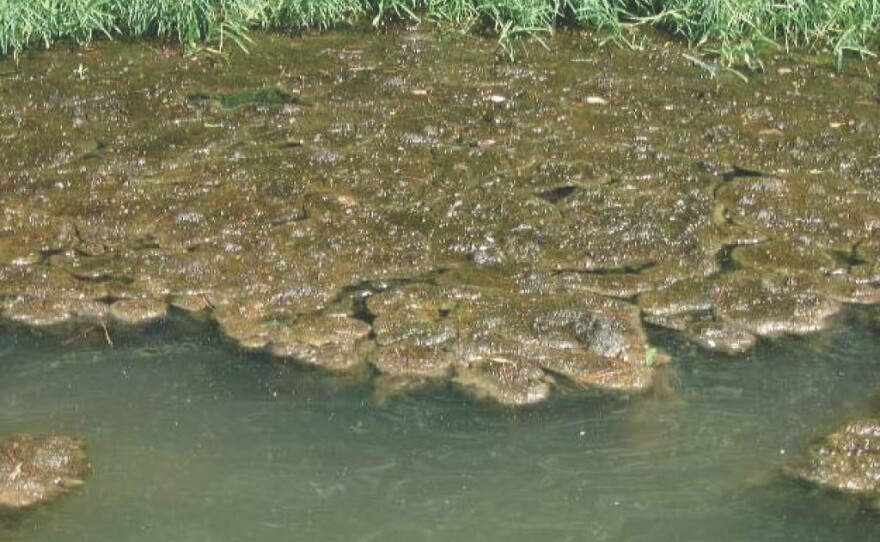
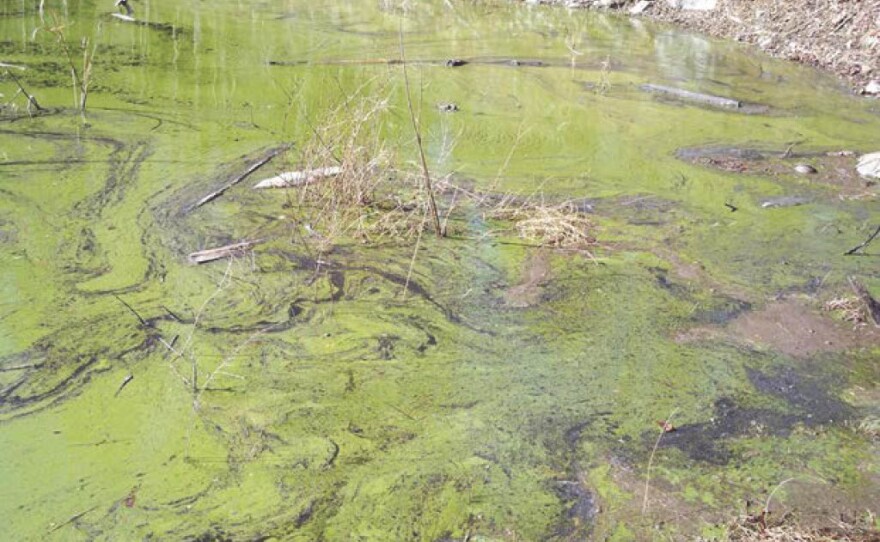
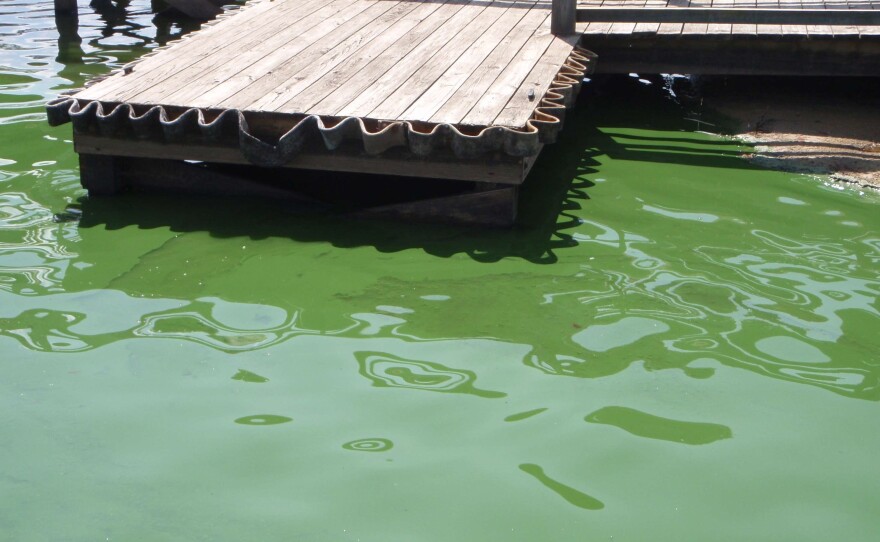
As temperatures increase across Eastern North Carolina, state environmental officials are reminding people to avoid contact with discolored water that could indicate the presence of an algal bloom. According to a news release from the N.C. Department of Environmental Quality, algae naturally occur in all water bodies. But certain conditions like increased nutrient loads, elevated temperatures, increased sunlight, and low or no water flow make warmer months conducive to an increase in the number of algal blooms. Certain algae can create toxins that can be harmful to humans, pets, and aquatic organisms so the public is advised to avoid contact with blooms. Decaying algae may produce a strong, foul odor that can affect a large area. Blooms can also move due to wind and wave action. To report an algal bloom, contact the nearest Divison of Environmental Quality regional office or submit a report online.
NC environmental officials warn algal blooms may increase as summer approaches
1 of
— Algae examples1024_2.jpg
Water discoloration
NCDEQ
2 of
— Algae examples1024_1.jpg
Algal mats
NCDEQ
3 of
— Algae examples1024_3.jpg
Surface scums
NCDEQ
4 of
— Algae-Resource-Pix.jpg
NCDEQ